Salt Lake City Occupational Therapy

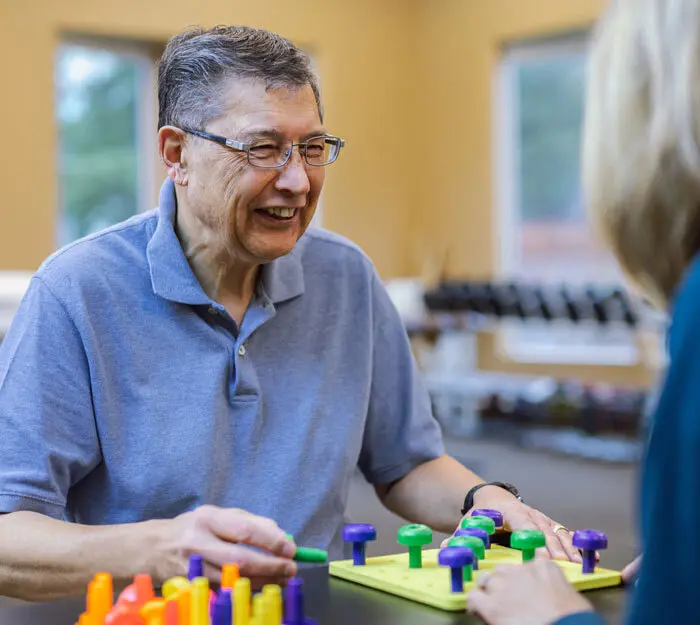
An occupational therapist working with a patient.

Occupational Therapy In Salt Lake City

Occupational therapy in Salt Lake City at Monument Health offers a personalized and holistic approach to rehabilitation services. Our team of experienced occupational therapists is dedicated to helping individuals regain independence, improve function, and achieve their goals.

Focusing on individualized care and evidence-based practices, we strive to support our clients in reaching their fullest potential. Whether recovering from surgery, hospital stay, injury, or illness, our goal is to enhance people’s quality of life and help them achieve more independence.

Schedule a consultation today for occupation therapy at Monument Health

Key Takeaways

  • Occupational therapy is a rehabilitative treatment that helps people restore motor skills and increase their independence.
  • Occupational therapists use activities and exercises during sessions.
  • Occupational therapy focuses on performing everyday activities, while physical therapy focuses on functional mobility.
  • Occupational therapy may be part of the medical treatment provided by skilled nursing facilities.

What Is Occupational Therapy Or Ergotherapy?

Occupational therapy helps individuals of all ages achieve independence in daily living activities. These activities may include self-care tasks, work responsibilities, and hobbies.

Occupational therapists work with clients to address physical, cognitive, emotional, and environmental challenges that may impact their ability to engage in these activities.

Our therapists aim to help patients refine their hand and upper extremity function, motor skills, bladder and bowel control, and lower extremity function.

What Does An Occupational Therapy Session Look Like?

An occupational therapy session usually begins with an initial evaluation to assess the individual’s strengths, challenges, goals, and needs. Based on this assessment, the therapist works with the individual to develop a personalized treatment plan that includes a variety of therapeutic interventions.

During subsequent sessions, an occupational therapist will:

  • Work with the individual on specific skills or tasks, such as dressing, grooming, or movement.
  • Provide exercises or activities to improve strength, coordination, balance, range of motion, and fine motor skills.
  • Teach adaptive techniques to help individuals overcome physical limitations.
  • Evaluate and recommend assistive devices or equipment to improve independence and safety in daily activities.
  • Make recommendations to modify the person’s home and work environment to facilitate optimal functioning.

What Is The Difference Between Occupational Therapy And Physical Therapy?

Occupational therapy (OT) and physical therapy (PT) both help individuals improve their quality of life through rehabilitative interventions. While there is some overlap between the two, there are key differences in their primary focus and treatment approaches.

PT focuses on improving a person’s movement, strength, flexibility, balance, and overall functional mobility. On the other hand, OT is not limited to regaining function but also ensures that an individual leads a fulfilling lifestyle by promoting independence in everyday activities.

Additionally, physical therapists prioritize improving mobility and physical function, while occupational therapists focus more on enhancing daily living skills and independence in meaningful activities.

Furthermore, physical therapy involves exercises to improve physical impairments. In contrast, OT includes adaptations, environmental modifications, and task-specific training to enhance overall daily functioning.

Both therapies are important in helping individuals recover from injuries or illnesses, improving their quality of life, and achieving their personal goals. In many cases, a collaborative approach involving both OT and PT is beneficial for comprehensive rehabilitation.

Start Occupational Therapy In Salt Lake City Today

When you are ready to regain independence, improve function, and regain independence, it is easy to find occupational therapy near you through Monument Health in Salt Lake City. Our caring and compassionate team is ready to work with you to develop a personalized care plan to help you reach your fullest potential. Contact us now to start regaining control over your independence.

Occupational Therapy FAQ

OT helps promote independence and improve overall well-being through personalized interventions tailored to individual needs.

Conversely, skilled nursing and rehabilitation primarily provide medical care and therapeutic services to help improve patients’ health following illness, injury, surgery, or hospitalization.

Both forms of OT, whether in skilled nursing or short-term rehabilitation enhance overall functioning and well-being.

Speech therapy assesses and treats speech, language, communication, voice disorders, and swallowing difficulties. Speech therapists use speech therapy sessions to help clients improve their ability to communicate effectively and safely swallow food and liquids.

The duration of occupational therapy varies depending on the individual’s specific needs, recovery goals, and treatment plan. The frequency and duration of OT also depend on factors such as the severity of the condition being treated and the progress made during therapy.

Individual OT sessions usually last between 30 minutes to an hour. The actual length of time can range from several weeks to several months, sometimes longer, depending on whether the person needs short-term rehab or long-term rehab.

Occupational therapy can be part of the treatment for adults affected by several conditions, including:

  • Amputation
  • Carpal tunnel syndrome
  • Cerebral palsy
  • Multiple sclerosis
  • Parkinson’s disease
  • Spinal cord injuries (SCIs)
  • Stroke
  • Traumatic brain injuries (TBIs)

Individuals may also benefit from occupational therapy if they’ve suffered an injury, such as a bone fracture, or if they’re recovering from surgery for an injury or joint replacement.

Monument Health’s occupational therapy program can provide a personalized treatment plan for seniors with health issues who struggle to complete activities of daily living.

Occupational therapy is a key rehabilitation service that skilled nursing care facilities provide. While physical therapists focus more on gross motor movements and muscle strength, occupational therapy prioritizes fine motor skills, hand strength, and hand-eye coordination.

The occupational therapists at Monument Health’s skilled nursing facilities use activities and exercises that promote grip strength and coordination. Treatment helps individuals regain balance, fine motor skills, and coordination, enabling them to be more independent, while performing personal care tasks, such as bathing, dressing, and eating.

Occupational therapy treatments also help improve mobility, so individuals can transfer safely from beds to wheelchairs or walkers.

In some cases, occupational therapy may help strengthen abilities affected by hospitalization-related deconditioning. In other cases, individuals may need occupational therapy to relearn how to perform tasks.

Before your occupational therapy evaluation, you’ll complete paperwork. The paperwork covers things like your medical history. You may also complete forms about your daily routine and functionality.

The evaluation has two main parts:

  1. Discussion: Your occupational therapist will want to clarify your goals and concerns. Discussing your needs gives them insight into your medical history and any day-to-day issues that occupational therapy could address.
  2. Observation: The occupational therapist will watch you perform skills tests related to identified areas of potential concern, which can include:
    1. Fine motor skills: The therapist may watch you cook or button clothes to assess your hand strength and coordination.
    1. Self-care and activities of daily living: The therapist may observe you while you feed or groom yourself.

The information gathered during an assessment helps the therapist set treatment goals and prioritize needs as part of a personalized treatment plan.

People may lose some functions after a stroke. Occupational therapy helps rebuild hand strength, fine motor skills, and coordination as part of post-stroke rehabilitation. Occupational therapists also teach stroke patients how to use assistive devices to increase their independence during their recovery.

Our Locations

Showing all 11 locations

Monument Health Group Millcreek

  • Mon - Sun: Open 24 hours

Monument Health Group Bountiful

  • Mon - Sun: Open 24 hours