How Skilled Nursing Care Supports Diabetes In Seniors
The Centers for Disease Control and Prevention (CDC) estimates that as many as one in 10 people in the U.S. (roughly 11.6% to be more exact) have diabetes. This number goes up to roughly 29.2% for seniors with diabetes (those 65 or older).
Early symptoms of diabetes, such as increased tiredness, tingling in the hands and feet, and weight loss can be brushed off by older adults as “just getting older,” according to the National Institute on Aging (NIH). Unfortunately, however, untreated or poorly managed diabetes can lead to serious issues with the eyes, kidneys, nerves, feet, and heart.
Properly managing your diabetes can help you live a longer, healthier, and more comfortable life. Keep reading to learn more about how diabetes nursing care at a skilled nursing facility can help support seniors with managing their diabetes.
Medication Management
Skilled nursing facilities for long-term care offer extensive services from medically certified staff. This includes nursing care plans for diabetes that assist patients with administering their medications routinely and in a timely manner, which is a vital factor for blood sugar control.
Considering that, in general, more than half of seniors are taking multiple prescription medications and seniors with diabetes are even more susceptible to the serious consequences of missing doses of their medication(s), this can be an invaluable service.
Blood Sugar Monitoring
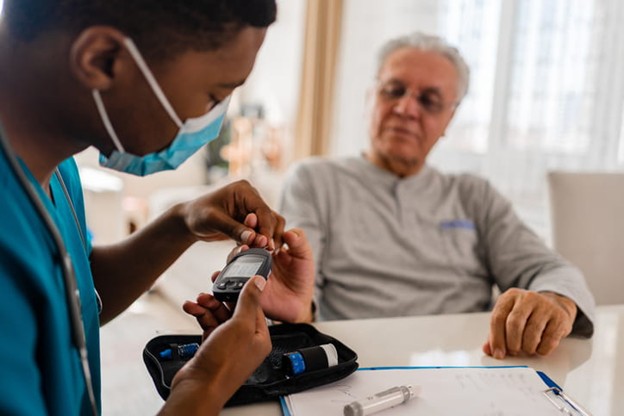
Seniors with diabetes who are staying at a skilled nursing facility will also have medically certified staff around 24/7 to assist with glucose monitoring (i.e. “blood sugar” monitoring).
This is a vital aspect of managing diabetes as blood glucose levels that become too high (hyperglycemia) or blood glucose levels that become too low (hypoglycemia) put the body at risk of serious complications, according to the NIH.
Access And Assistance With Diabetic-Friendly Meals
Receiving diabetes care in a skilled nursing facility will also give you access to healthy diabetic-friendly meals. The Mayo Clinic notes that a healthy diet is one of the best ways to help keep your blood sugar under control. Diabetic diets should focus on healthy meals at regular intervals to help control blood sugar spikes.
Seniors with diabetes should also avoid:
- Foods and drinks with added fats, sugar, or salt.
- Unhealthy carbohydrates, such as white bread, white rice, processed snacks, white pasta, and fast food.
- Trans fats (generally found in processed snacks).
- Saturated fats (found in high fat dairy products and animal proteins, like sausage, bacon, hot dogs, etc.).
- Cholesterol.
Regular Medical Oversight
The NIH also notes that diabetes can affect various parts of the body, making medical management a necessity in handling the condition. At a skilled nursing facility, you will have consistent medical oversight to not only help you control your diabetes, but to continuously assess whether you’re displaying any signs that diabetes is affecting another part of your body.
If you or a loved one is struggling to manage your diabetes, consider seeking diabetes nursing care at a skilled nursing facility. This way, you will have continued access to medically trained staff that can assist you with keeping your blood glucose numbers under control and have regular easy access to healthy diabetic-friendly meals, all while having consistent access to medical care for your diabetes, as well as any other health condition(s) you may need assistance with.
Contact Monument Health Group for more information today to manage your diabetes.