Balance Exercises For Seniors
Older adults face age-related health issues, including balance issues. Developing a routine that includes balance exercises for seniors can help older adults reduce the risk of balance problems and prevent falls.
Why Balance Naturally Declines With Age
It’s common for balance to decline once you turn 50. Factors contributing to the age-related decline of balance include:
- Changes to the musculoskeletal system: Muscle mass and strength decrease as people age. These losses significantly affect the body’s core and legs, decreasing stability, and increasing the risk of balance problems.
- Degeneration of the vestibular system: Sensory hairs and cells in the vestibular system are part of the inner ear deterioration that occurs with age. Since the vestibular system plays a key role in maintaining balance and detecting movement, this deterioration contributes to balance issues.
- Joint rigidity: Joints lose flexibility as you age, which reduces your stability.
- Lifestyle: A sedentary lifestyle can accelerate the deterioration of your balance.
- Mobility issues: Older adults are at increased risk of arthritis, which can affect their mobility.
- Nervous system changes: Reductions in nerve signal speed affect coordination and response times.
- Sensory system changes: Since eyesight deteriorates with age, it’s harder for older adults to judge depth when moving.
Common Causes Of Balance Issues In Seniors
In addition to the physiological changes, such as muscle weakness and neurological conditions, that cause balance to deteriorate with age, the following factors are common reasons for balance issues affecting older adults:
- Chronic illness: Chronic illnesses can cause physiological changes that exacerbate balance deterioration. For example, diabetes can cause neuropathy, which makes it more difficult for seniors to maintain their posture.
- Medication: Some medications contribute to balance issues.
- Previous falls or injuries: Injuries to joints, muscles, and tendons can reduce your strength, increasing the risk of balance issues.
The Serious Risks Associated With Poor Balance
Older adults with poor balance have an increased risk of experiencing the following:
- Falls: Injuries from falls send three million older adults to emergency rooms annually.
- Fractures: Common injuries from falls include hip fractures.
- Hospitalizations: Injuries from falls are responsible for one million older adults being hospitalized each year.
- Isolation: Older adults recovering from falls or struggling with balance issues may fear falling and become more sedentary, which can make it harder to enjoy social opportunities.
- Loss of independence: Older adults may need care after falls as their balance deteriorates, leading to a loss of independence.
Examples Of Balance-Focused Activities
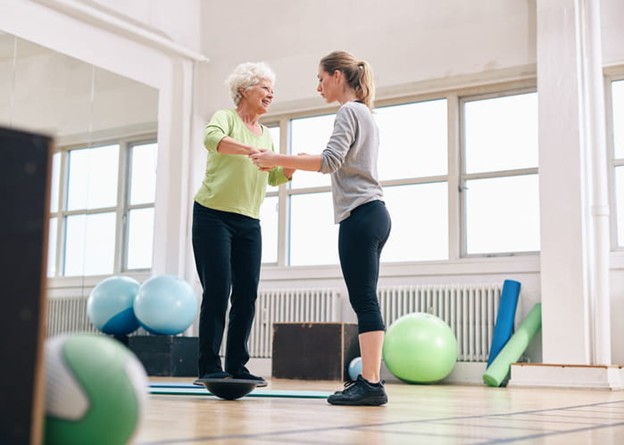
The best balance exercises for seniors are high-level balance training exercises performed during physical therapy sessions. Physical therapists have expert training that enables them to assess individuals’ needs and develop customized exercise routines to help them achieve their mobility goals.
Easy balance exercises that physical therapists may use are designed to:
- Improve gait
- Improve mobility
- Increase stability
- Increase strength
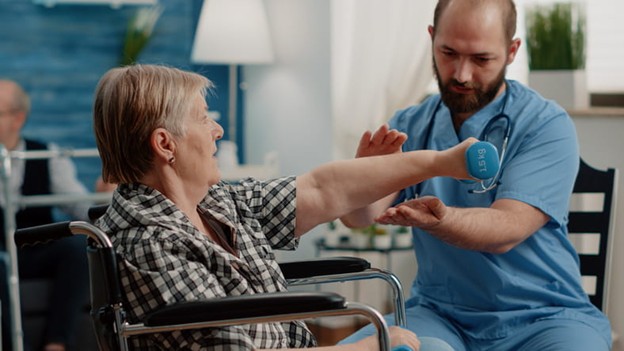
Physical therapists also supervise standing and walking exercises to ensure older adults learn to perform them correctly and remain safe while completing them. Additionally, physical therapists may use assistive devices to help older adults perform exercises safely as they regain strength and stability.
Why Balance Exercises Are Safer And More Effective In A Skilled Nursing Facility
Reasons it is safer and more effective for older adults to perform balance exercises in a skilled nursing facility include:
- Clinical oversight: Skilled nursing facilities have physical therapists who can evaluate balance issues and develop safe exercise routines for each person.
- Fall-prevention protocols: Skilled nursing facilities are designed to prevent falls.
- Personalized care plans: Each resident in a skilled nursing facility has a customized care plan designed to help them achieve their health goals.
- Rehabilitation and nursing support: Skilled nursing facilities have registered nurses and rehabilitation professionals, such as physical therapists, on staff. These professionals are trained in fall-prevention protocols.
How Skilled Nursing Supports Recovery From Balance-Related Health Issues
Skilled nursing facilities are ideal environments for older adults recovering from the following:
- Falls
- Hospitalization
- Surgery
Physical therapists develop exercise programs for individuals recovering from falls to help them regain strength, stability, and confidence. Physical therapists also work with individuals recovering from hospitalization who may need to rebuild muscle strength. Individuals recovering from surgery benefit from physical therapy exercises to help them regain flexibility and strength.
Safety At Home For Older Adults
Older adults who receive treatment in skilled nursing facilities may be able to return home with confidence. Monument Health Group’s skilled nursing facilities help residents regain independence and balance. Our physical therapists may also teach individuals how to use assistive devices to reduce their risk of falls and enable them to return home safely.
How Monument Health Group Helps Older Adults With Balance Issues
Older adults in Utah who need care after a fall, hospitalization, or surgery will experience expert care from Monument Health Group. Find a location that’s ideal for you and contact us to learn how our rehabilitation experts can help you achieve your health goals. Our team develops personalized plans for each resident, ensuring you receive expert care that will expedite your recovery.