What Causes Unexplained Bruising In Seniors?
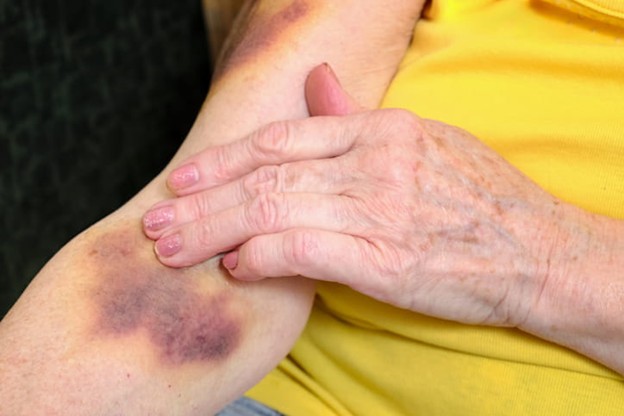
Bruises are a common occurrence affecting people of all ages. However, as people age, they may bruise more easily. In some cases, an elderly person’s bruising can also indicate they have a serious health issue that should be addressed.
If you have an older loved one or are a caregiver for older adults, it’s beneficial to understand why older people bruise easily, how to know if bruising is a sign of a health issue, and what to do to address health issues causing unexplained bruises.
Why Do Older People Get Unexplained Bruises?
Bruises typically appear because of broken capillaries. Blood leaks out and gets caught under the skin when blood vessels are damaged. That trapped blood is what appears as a bruise.
Bruises change color as they heal.
The bruise’s color can help you narrow down when it occurred, which can help you determine the cause. Initially, bruises appear as a red mark on the skin. Then, the color they change to depends on the person’s skin tone.
| Light Skin Tone | Medium Skin Tone | Dark Skin Tone | |
| 24 to 48 hours after capillaries are broken | Bruise changes to black, blue, or purple | Bruise changes to black, blue, or purple | Bruise looks darker |
| Five to 10 days after capillaries are broken | Bruise changes to yellow or green | Bruise changes to yellow or green | Bruise’s color lightens |
| 10 to 14 days after capillaries are broken | Bruise changes to yellowish brown or light brown | Bruise changes to yellowish brown or light brown | Bruise fades gradually |
Bruises take approximately 14 days to heal.
So, why do elderly people bruise easily? As you age, your skin thins. The amount of fatty tissue protecting your blood vessels also decreases. With less protection, it’s easier to break blood vessels.
Elderly Bruising Causes
In addition to physiological changes, such as thinning skin, that make it easier for elderly people to get bruises, there are several other reasons why bruising is more common as people age, including the following:
- Medications:
- Antibiotics: Older adults are susceptible to viruses and infections and may be prescribed antibiotics, which can interfere with the blood’s ability to clot, making them more prone to bruising.
- Anticoagulants: Heart disease affects 16% of adults 65 and older. Anticoagulants are blood thinners, which can help prevent strokes and heart attacks, but make bruising easier.
- Antidepressants: Depression affects 15% of older adults. Those prescribed antidepressants may bruise more easily because some antidepressants prevent blood from clotting properly.
- Corticosteroids: People take corticosteroids to reduce swelling and inflammation. Corticosteroids reduce skin thickness, making it more prone to bruising.
- Painkillers: Aspirin, Ibuprofen, and Naproxen sodium make it harder for blood to clot, which makes it easier to bruise.
- Supplements:
- Ginkgo biloba thins the blood, which makes it easier to bruise.
What Medical Condition Causes People To Bruise Easily?
Conditions that reduce the number of blood platelets a person has or impair their ability to function can cause easy bruising.
These medical conditions include:
- Autoimmune diseases, including:
- Lupus
- Rheumatoid arthritis
- Hemophilia, which can be acquired with age
- Leukemia
When Should I Worry About A Bruise In The Elderly?
When an older person bruises, it may indicate a serious underlying issue. Signs that bruises warrant investigation include:
- Increased size or pain: If the bruise increases in size or becomes more painful, it may indicate a health issue.
- Location: It’s most common to get bruises on your arms and legs. However, bruises on your back or face could indicate a health issue.
- Prolonged bruising: Bruises typically heal within 14 days. If bruising lasts longer, it could indicate a health issue.
- Unknown causes: If the bruise can’t be traced to a bump or fall, it may indicate a medical issue.
You should also follow up if other symptoms, such as fever or severe pain, accompany bruises.
Although serious health issues are one reason bruising may warrant investigation, they aren’t the only reason to be concerned about bruising in older adults. Unexplained bruising could indicate a fall, which may be due to vision or balance issues.
Bruises may also indicate that the older adult is a victim of abuse. Unexplained bruises and bruises appearing in less common places, such as the abdomen, back, and face, should be investigated.
Why Choose Monument Health For Your Skilled Nursing Needs?
Monument Health provides expert skilled nursing for older adults recovering from injuries or adjusting to recent diagnoses. Our medical staff creates unique treatment plans designed for each resident.
These plans prioritize the residents’ short- and long-term treatment goals, which include regaining independence. Our caregivers respect each resident and their needs, ensuring they’re treated with dignity as we address their health issues.