The Role Of Family In Senior Care
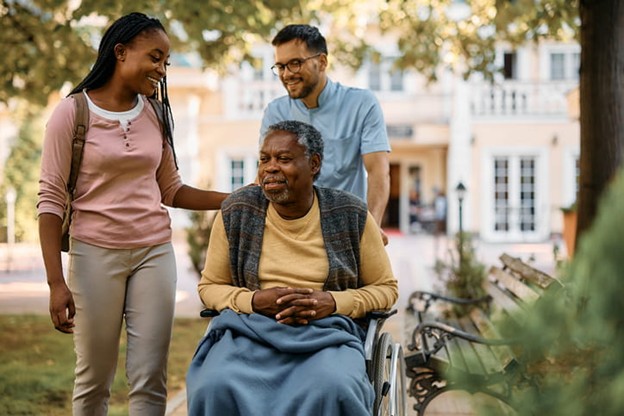
Around 63 million American adults act as family caregivers to a relative with a medical condition or disability in the U.S. Keep reading to learn more about how family support affects elderly family members in senior care.
Why Is Family Involvement Important To Senior Care?
When family is involved in an elderly family members’ senior care, they provide crucial support for their loved one and improve patient outcomes. The additional support family members provide often leads to a deeper level of personalized care.
Here are some benefits that happen when family members are involved in their loved one’s senior care services:
- Improved communication with staff: Family of elderly family members may act as a bridge of communication between medical staff and elderly patients. They can also provide invaluable information that may go unnoticed by the patient, further ensuring the best possible care.
- Ease of transitions: Transitioning to a senior care facility can be stressful. Family members often provide support during this period by helping with moving personal belongings, running errands, etc.
- Families provide emotional support: Any life transition can be difficult. Families often provide comfort for a resident during a situation that may feel overwhelming.
- Family members help residents learn: Whether it’s technology or a new hobby, relatives are often the best ones at teaching seniors how to learn a new skill that can make their life easier.
- Encourages residents to remain active: Family members can encourage residents to socialize more and invite them to outings. This helps residents stay socially and physically active, which, in turn, helps them stay independent.
Family Involvement Leads To Better Outcomes
Patients whose families are involved in their care tend to have the following benefits:
- Live longer: A 2024 study found that longer life expectancy and a longer disability-free life are correlated to those with robust social networks (including strong family bonds).
- Superior care: Family members are often the ones insisting their loved one gets the best treatment, has access to nutritious meals, and is receiving enough emotional support.
- Improved mental health: A 2025 study found that elderly patients who had emotional support from their adult children had improved mental health.
- Improved brain and immune health: Seniors who participate in family activities tend to eat more nutritious meals, get more regular exercise, and play games that may stave off dementia.
How Families Can Effectively Communicate With Healthcare Providers
Maintaining effective communication with your loved one’s care team can be made easier when your loved one is equally aware of what’s going on with their treatment.
You should follow these tips:
- Include your loved one in discussions about their care.
- Go slowly:
- Speak plainly, slowly, and in a mellow tone. Allow your loved one to voice their concerns and opinions without interruptions.
- Ask questions:
- Your loved one may not have considered the question or may be too nervous to ask.
- Ask to have all the options laid out and explained in detail.
- Consider taking notes and having your questions written down.
- Be sure to ask how managing chronic conditions, medications, etc. works at the facility.
For patients entering long-term care, it’s important to help your loved one feel comfortable, but they also may need to find/maintain a sense of independence.
Consider making the transition easier by:
- Slowly easing them into the new environment.
- Give your loved one personal time with the care team:
- It’s important that they learn to interact with the team independently. The team also needs time to observe how they act without you (This is especially important for patients who may be struggling with memory issues).
- Ask your loved one if they feel like the facility meets all their needs.
- Ask if your loved one feels comfortable at the facility.
- Visit often.
- Consider attending events at the facility.
- Become familiar with the staff to ensure the best care is provided.
- Know your loved one’s rights as a patient.
How Can Families Stay Connected With Their Loved One In A Utah Skilled Nursing Facility?
Skilled nursing facilities, such as Monument Health, offer patients personalized care that is tailored to their needs. This includes coordinating with other medical staff and families to ensure the easiest transition for our patients.
We also offer digital coordination options to help the entirety of the care team stay in the loop. Staying connected with a loved one on a personal level can be as simple as making sure to call them on a regular basis.
Moving elderly family members to a senior care facility can be difficult. By choosing a facility that prioritizes family and senior care, everyone can be more comfortable with the decision.